Psychology Glossary
Social Sciences glossary
This glossary is for my English class. I will have to talk a lot about my field of study, so it is a good idea to have a glossary about it.
- Active listening
- verb
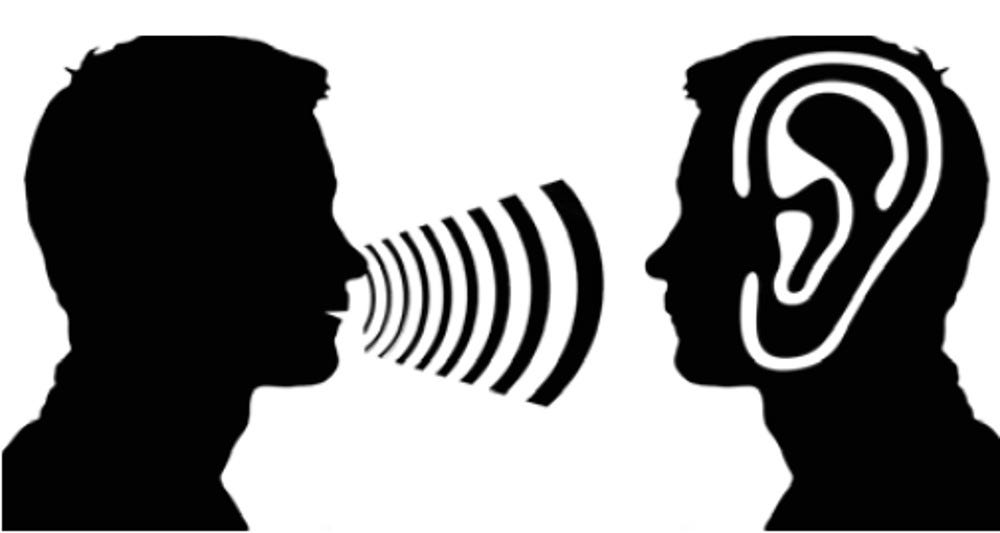
- Active listening is the ability to focus completely on a speaker, understand their message, comprehend the information and respond thoughtfully.
- Example: If someone is active listening to what I have to say, I will feel understood.
- en: Écoute active
- Anxiety
- noun
- Anxiety is an emotion characterized by feelings of tension, worried thoughts and physical changes like increased blood pressure. People with anxiety disorders usually have recurring intrusive thoughts or concerns. They may avoid certain situations out of worry
- Example: My friend is doing anxiety.
- en: Anxiété

- Big Five
- noun
- The "big five" are broad categories of personality traits
- Example: The Big Five are the main personality traits of a person.
- en: Grand Cinq

- Cognition
- noun
- the mental action or process of acquiring knowledge and understanding through thought, experience, and the senses
- Example: Many things are related to cognition.
- en: Cognition

- Denial
- noun
- If you're in denial, you're trying to protect yourself by refusing to accept the truth about something that's happening in your life
- Example: This patient is in denial.
- en: Déni

- Diagnosis
- noun
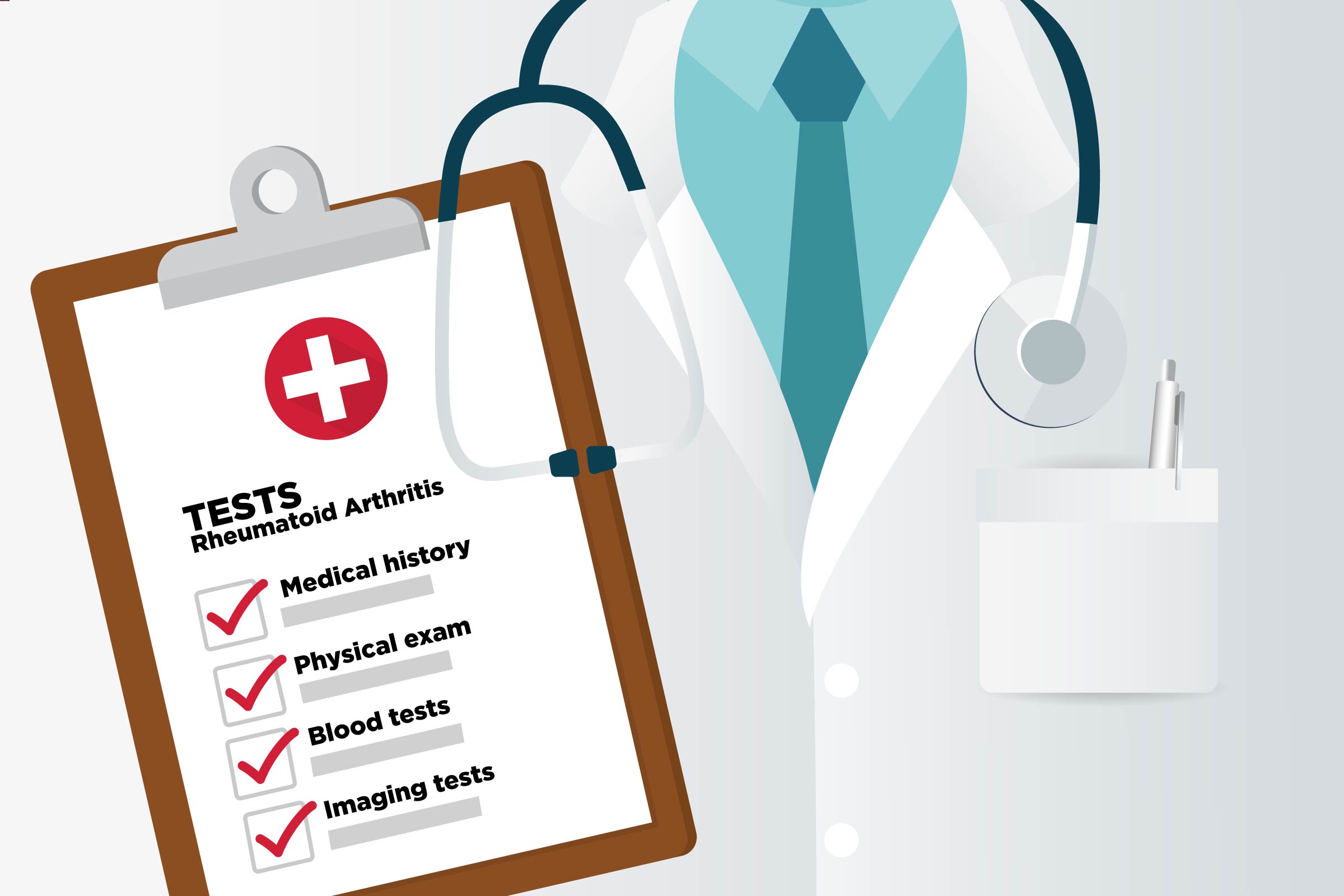
- the identification of the nature of an illness or other problem by examination of the symptoms
- Example: The diagnostic was finally found by the psychologist.
- en: Diagnostic
- Emotional intelligence
- noun
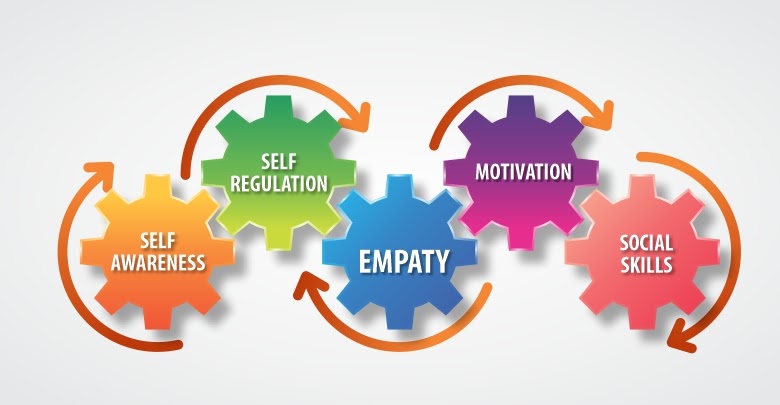
- the capacity to be aware of, control, and express one's emotions, and to handle interpersonal relationships judiciously and empathetically
- Example: A good psychologist must have emotional intelligence
- en: Intelligence émotionnelle
- Hypochondriasis
- noun
- A disorder in which a person has constant fears of having a serious disease.
- Example: My grandma thinks she has cancer because she doesn't feel well : she is doing hypochondriasis
- en: Hypocondrie
- Hypothalamus
- noun
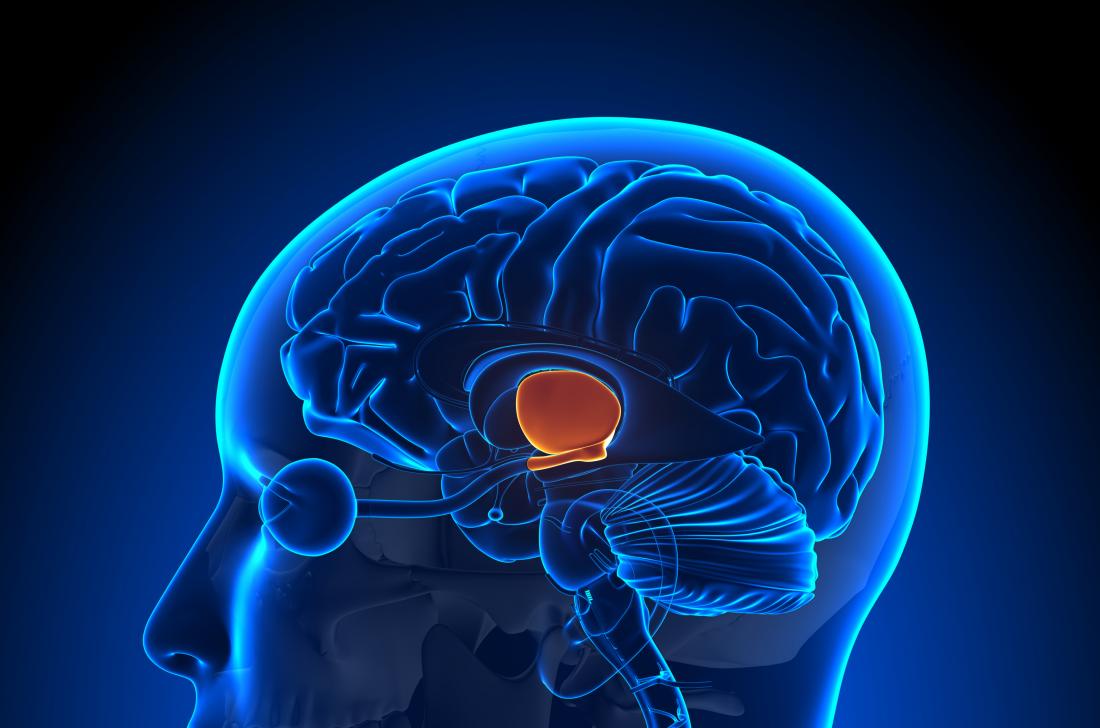
- a region of the forebrain below the thalamus which coordinates both the autonomic nervous system and the activity of the pituitary, controlling body temperature, thirst, hunger, and other homeostatic systems, and involved in sleep and emotional activity
- Example: This part of the brain is the hypothalamus.
- en: Hypothalamus
- Hysteria
- noun
- Hysteria is a pejorative term used colloquially to mean ungovernable emotional excess and can refer to a temporary state of mind or emotion
- Example: This person is suffering from hysteria.
- en: Hystérie

- Panic attacks
- noun
- A panic attack is a sudden feeling of intense fear or discomfort that peaks within minutes. It includes stressful physical and cognitive symptoms as well as behavioural signs.
- Example: She is having panic attacks frequently.
- en: Crises de panique

- Personality disorders
- noun
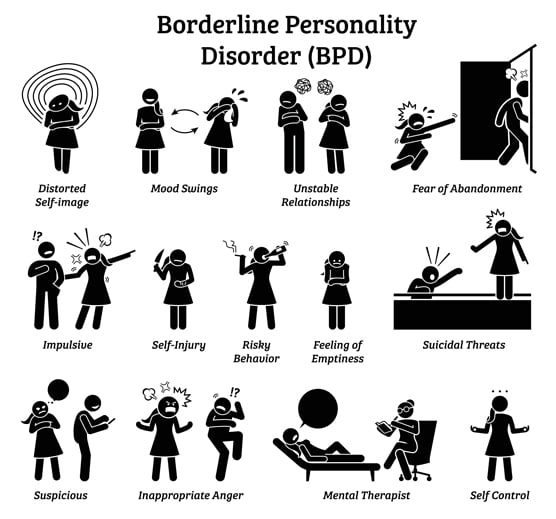
- A personality disorder is a type of mental disorder in which you have a rigid and unhealthy pattern of thinking, functioning and behaving. A person with a personality disorder has trouble perceiving and relating to situations and people
- Example: She has a personality disorder.
- en: Troubles de personnalité
- Phobia
- noun
- an extreme or irrational fear of or aversion to something
- Example: Psychologists may meet people with many different phobias.
- en: Phobie

- Placebo
- noun
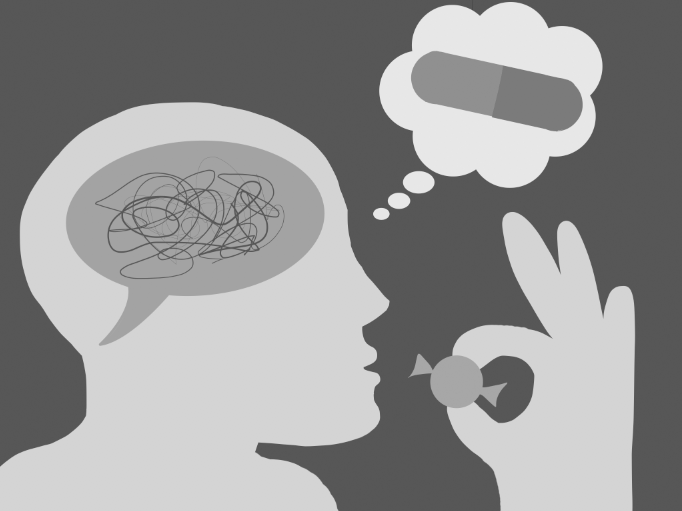
- a harmless pill, medicine, or procedure prescribed more for the psychological benefit to the patient than for any physiological effect
- Example: This man have been prescribed placebo pills; the pills only have a psychological effect.
- en: Placebo
- Psychologist
- noun
- an expert or specialist in psychology.
- Example: My friend recommended me to go see a psychologist.
- en: Psychologue

- Psychology
- noun
- The scientific study of the human mind and its functions, especially those affecting behavior in a given context.
- Example: A student in psychology likes to interact with people
- en: Psychologie

- Psychotherapist
- noun
- a person who treats mental disorders by psychological rather than medical means.
- Example: I would recommend that you see a psychotherapist.
- en: Psychothérapeute

- Science
- noun
- knowledge about the natural world that is based on facts learned through experiments and observation
- Example: I like to explain my arguments with science.
- en: Science

- Superego
- noun
- the part of a person's mind that acts as a self-critical conscience, reflecting social standards learned from parents and teachers
- Example: I used my superego
- en: le sur-moi

